A design guide for
wildfire hardening
It measures your exposure, tells you what to build, at what level, on which wall. Free. Open. Voluntary.
Hardening means changing the materials and construction details of your home so it resists wildfire exposure — embers, radiant heat, and flame. It is not fireproofing (nothing is fireproof). It is not sheltering in place (always evacuate when told). It is making your home dramatically more likely to survive a fire event without anyone there to defend it.
Two ratings, one system
How much hardening does your home need? It depends on what's around it. We measure three things: what vegetation is nearby, how far away it is, and whether it's uphill. These three factors give each wall of your home a level. We call it your Wildfire Exposure Rating (WER).
Built on research from Australia's AS 3959, California's Chapter 7A, NIST, IBHS, and the NRC National Guide for WUI Fires.
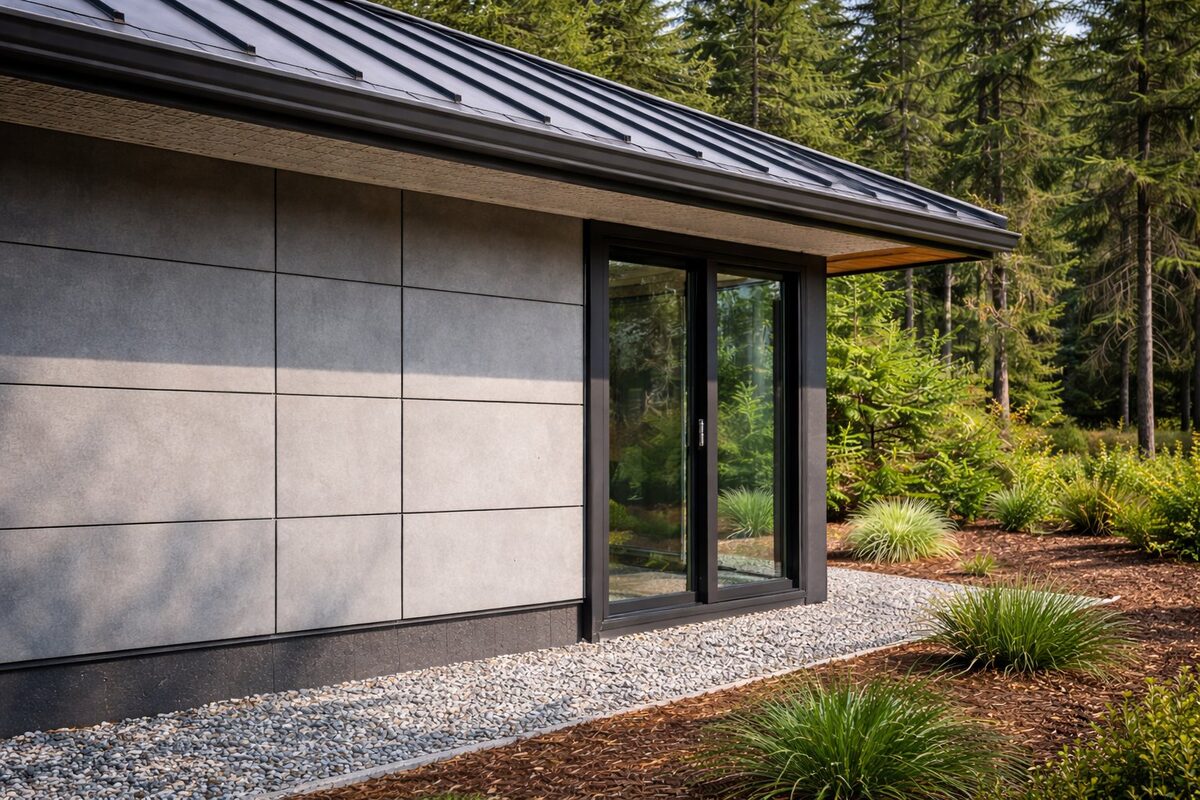
Metal roof. Fibre cement cladding. Tempered glass. Gravel setback. This is what WER-3 looks like.
Your neighbour's house is also a fire risk. If it's closer than 10 metres, we measure that too — it's called your Close Neighbour Exposure Level (CNEL).
Embers arrive from any direction, so roof and vent measures apply to the whole building. But radiant heat is directional — only the wall facing the threat needs upgrading. Your north face might be WER-2 while your south face is WER-1. You only upgrade what needs it. This saves thousands.
Match the response to the threat
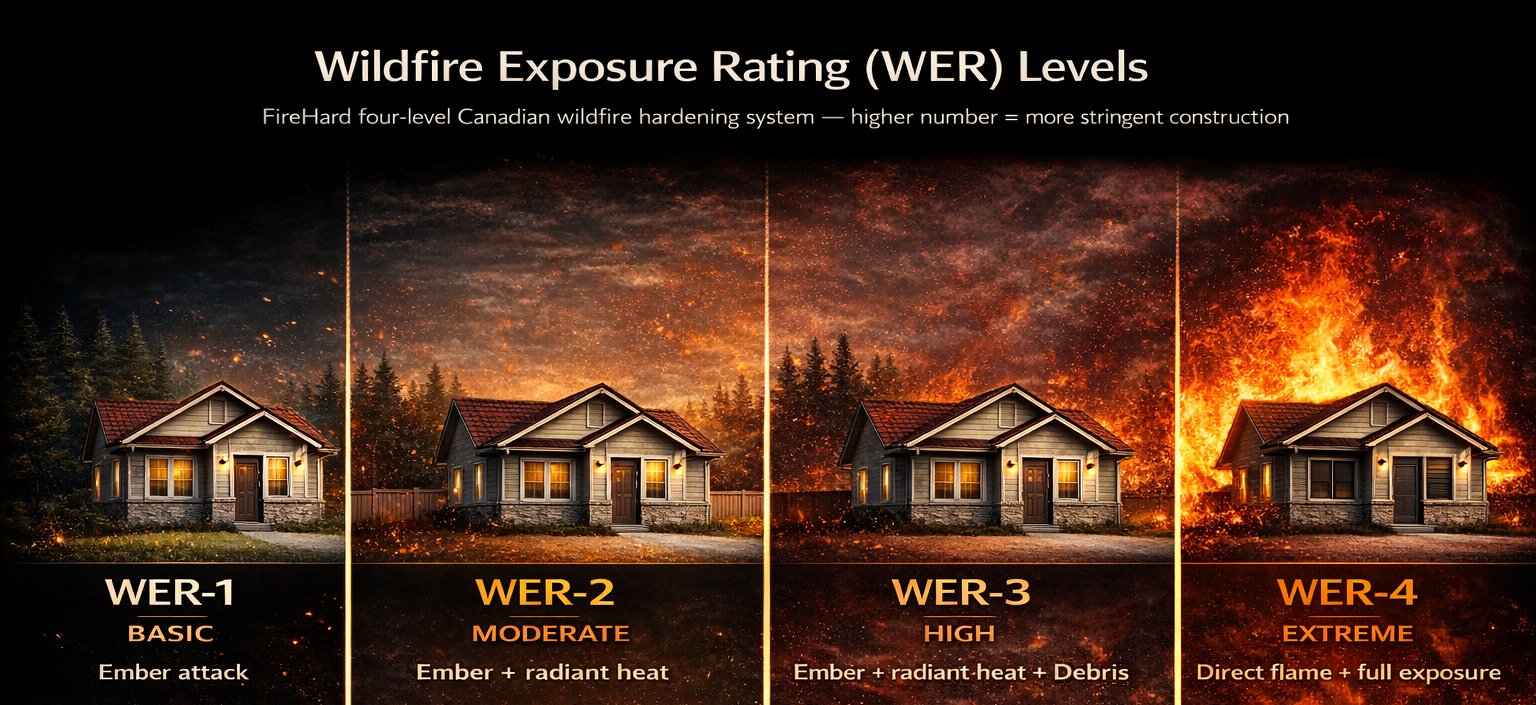
Each level builds on the one below it. Your design guide has the full construction details — here is what each level means.
Keep embers out. Class A roof, 3 mm vent mesh, seal all gaps > 3 mm, 1.5 m gravel perimeter, clean gutters. Weekend project for most homeowners.
Costs almost nothing — product choices, not upgrades.
DIY. Mesh, caulking, gravel. Roof is the only big item.
Protect exposed walls from sustained radiant heat. Upgrade windows to tempered glass, replace vinyl siding with non-combustible, seal soffits. Only on the faces that need it.
3–8% premium. Spec fibre cement + tempered glass.
Contractor. Prioritise: glazing → siding → soffits.
Full non-combustible envelope on exposed faces. Metal roof, fire-rated vents, enclosed soffits, non-combustible cladding top to bottom, fire shutters. The design guide has all the specs.
8–15% premium. Metal roof is the big decision.
General contractor. Combine with planned exterior work.
Exceeds prescriptive guidance. Licensed Professional Engineer must design the envelope. Vegetation management may be more cost-effective.
North face WER-2 but south face WER-1? Only upgrade the north wall. This can save $5,000–$30,000 versus treating every face at worst-case. The calculator assesses each face independently.
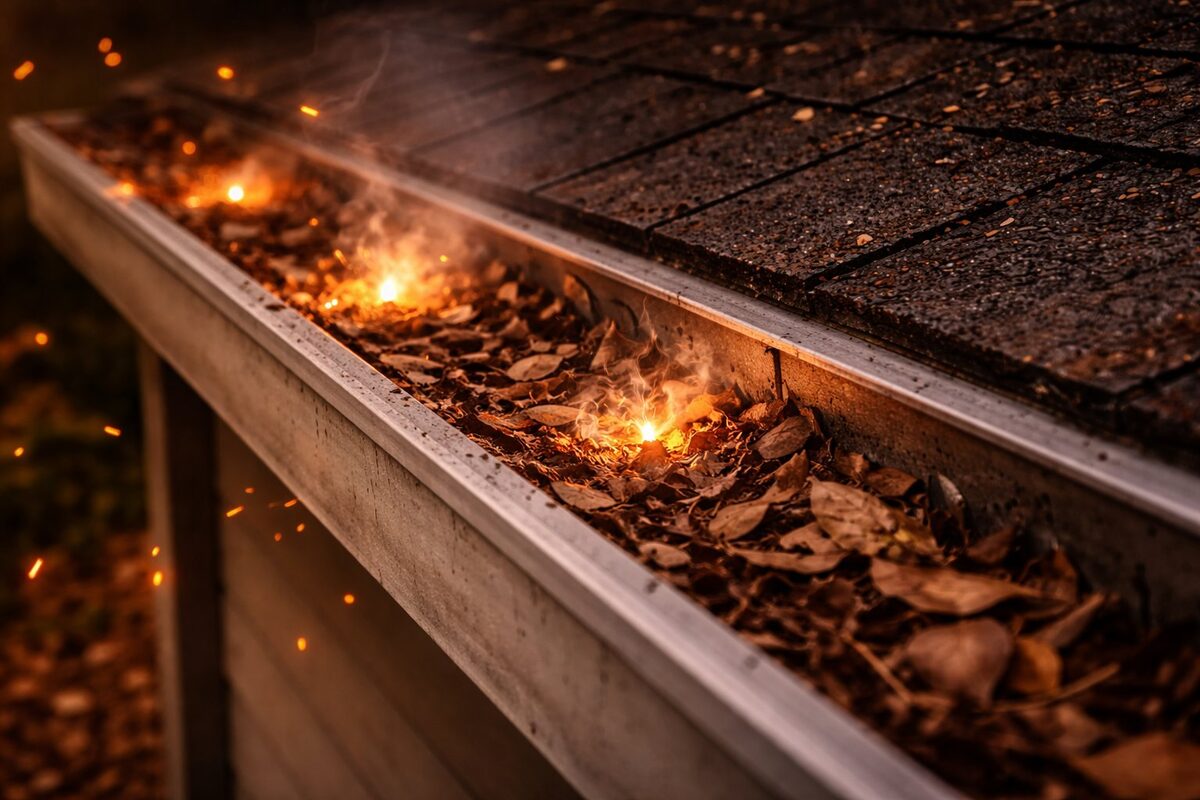
This is how homes ignite. Embers land in gutters, vents, and gaps — not direct flame contact.
The CNEL system
Most subdivision homes are 2.4–6 m apart. One burning home can ignite the next. CNEL measures eave-to-eave distance and tells you what to upgrade on the facing wall.
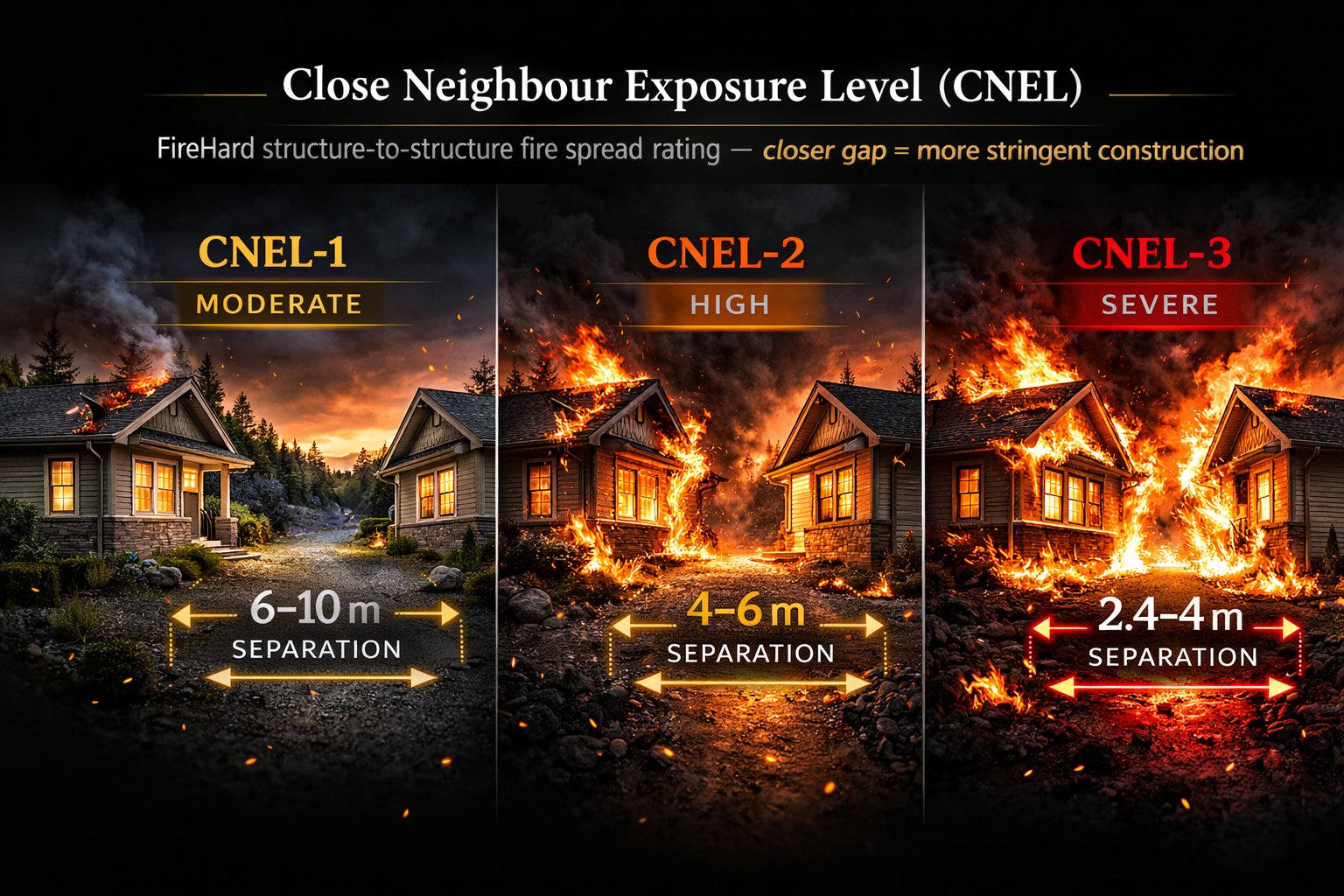
WER-1 measures on facing wall and eave.
WER-2 measures. Most common Canadian scenario.
WER-3 measures. NC soffits + shutters required.
Don’t Invite Disaster
These common features and habits dramatically increase your risk. Most are easy and cheap to fix.
Ready to find your level?
The calculator takes 30 minutes, it’s free, and your report includes the right design guide for your level.
Assess Your Home →